

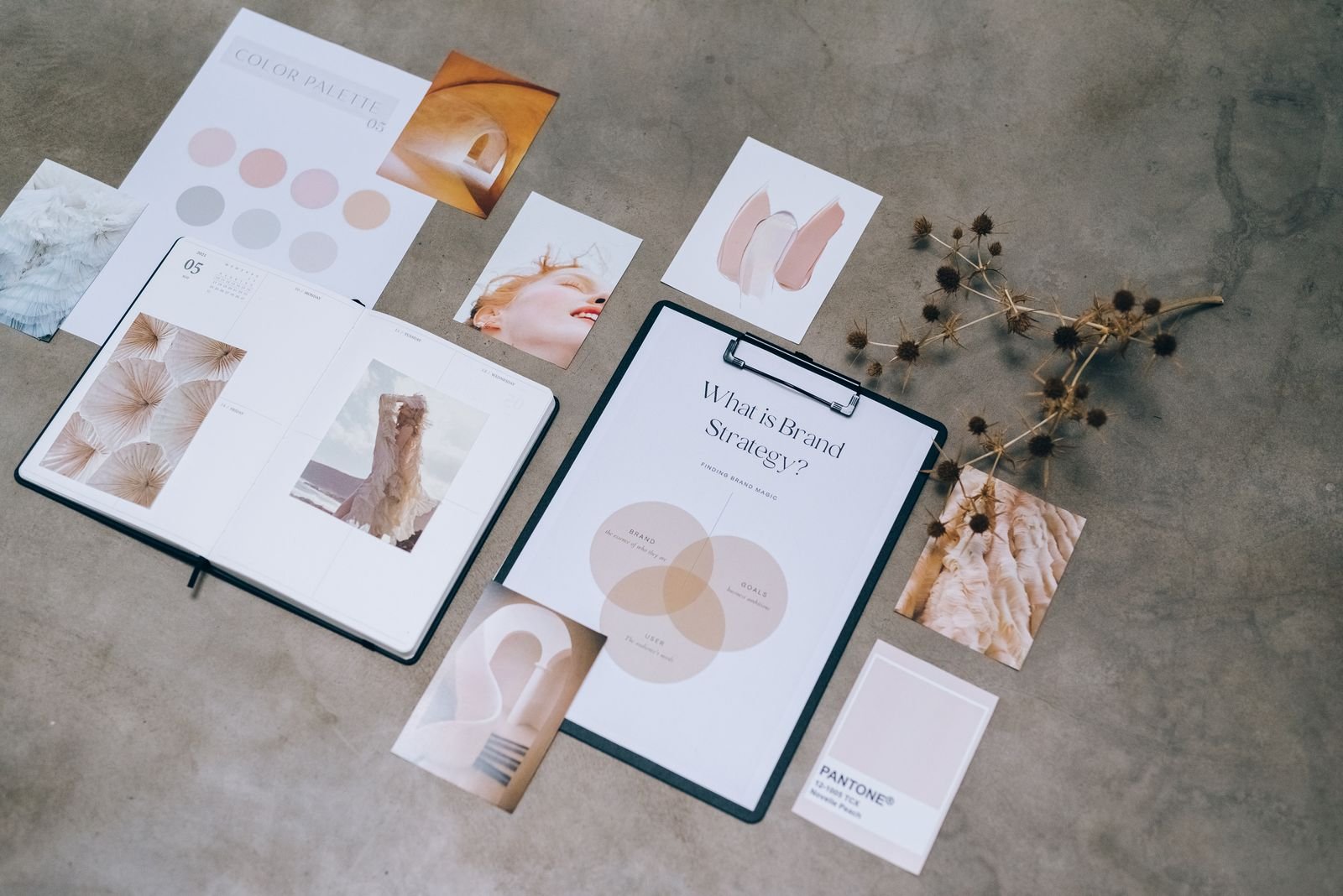
Ask ten business owners what a brand identity is and nine of them will describe a logo. That misunderstanding is expensive. Your logo is one component of your brand identity, and not the first one you should work on. A brand identity is the complete system your business uses to be recognized and remembered: the strategy underneath it, the visuals that express it, the voice that speaks it, and the discipline that keeps all of it consistent everywhere a customer meets you.
This guide walks through the full process of building a brand identity that actually works, in the order the work should be done. Skipping ahead to the visuals is the most common mistake in branding, and it is the reason so many businesses own a beautiful logo that does nothing for them. Identity built in the right order gives you something much more valuable than a nice logo. It gives you recognition, trust, and pricing power.
What a Brand Identity Actually Includes
A complete brand identity has three layers, and each layer depends on the one before it.
The first layer is strategy: who you serve, what you stand for, how you are different, and what you want to be known for. This layer is invisible to customers, but it directs everything they see.
The second layer is expression: the visual identity (logo system, colors, typography, imagery style) and the verbal identity (your voice, your messaging, the words you use and refuse to use). This is the layer most people think of as "the brand."
The third layer is behavior: how the identity shows up in practice, in your website, your social media, your proposals, your packaging, your customer service. An identity that only exists in a brand guidelines document is not an identity. It is a wish.
Most branding projects fail because they start at layer two, rush through it, and never build layer one or layer three. The process below fixes that.
Step 1: Define Who the Brand Is For
Every strong identity begins with a specific audience, and "small business owners" or "women 25 to 45" is not specific. You need to be able to describe your ideal customer as a person: what her day looks like, what she is trying to accomplish, what frustrates her about the options she has now, and what she values enough to pay for.
This matters for identity because every design and messaging decision gets easier and better when it is made for someone in particular. Colors, words, photography style, even price presentation all read differently to different people. A brand trying to appeal to everyone ends up designed for no one, and it shows: the identity feels generic because it was built generically.
Write down, in plain language, who this brand is for, what that person wants, and what she is tired of. You will make every later decision against that page.
Step 2: Decide What You Stand For
Next comes the substance of the brand: your position and your point of view. Three questions do most of the work here.
First, what do you do differently? Not better, differently. "Better service" is a claim every competitor makes. A real difference is structural: a different method, a different specialty, a different kind of client, a different experience from first click to final delivery.
Second, what do you believe about your industry that shapes how you work? The beliefs are the raw material of a voice. A bakery that believes celebration cakes should be designed around the person, not the trend, will build a different identity than one that believes in classic technique above all. Neither is wrong. They are simply different brands, and their identities should not look or sound alike.
Third, what do you want to be known for if you can only be known for one thing? This is the hardest question and the most valuable one. A brand that tries to be known for six things is remembered for none of them.
This strategy step is where most identity projects quietly go wrong, because the questions are simple to ask and hard to answer alone. If you reach this point and the answers feel fuzzy, that is exactly what a strategy call is for. Book a free strategy call with Elysia and we will work through your audience and position together, whether or not you hire us for the build.

Step 3: Build the Visual Identity System
Only now does design enter, and it enters with a brief: express the audience and the position you have defined, in visual form. A professional visual identity is a system, not a single logo file. It includes:
A logo suite. A primary logo, a secondary version for different layouts, and a compact mark or icon for small spaces like social avatars and favicons. If your logo only works in one shape and one color, it will break in real use, and it will break publicly.
A color palette with jobs assigned. A primary color, supporting colors, and neutrals, each with a defined role. Palettes fail in two directions: too few colors to work with across real materials, or so many that nothing looks related. Most small businesses need a disciplined set they can apply without improvising.
Typography. One typeface for headlines, one for body text, chosen to carry the brand's personality and to stay readable at every size. Your fonts speak before your words do: a typeface can read established or playful, clinical or warm, and it should agree with everything else you have decided.
An imagery style. The photography and graphics direction: lighting, subjects, composition, editing treatment. Imagery is usually the largest visual surface a brand has, especially on social media, and it is the one most businesses leave completely unplanned. Define what your images look like on their best day, and hold every photo to it.
Design elements. Patterns, textures, icons, or graphic devices that add recognition. These supporting elements are often what make a brand feel rich and unmistakable in feeds and layouts where the logo is small or absent.
Step 4: Build the Verbal Identity
Your brand speaks far more often than it is seen in logo form. Captions, emails, proposals, your website, your contracts: words are the majority of your identity's surface area, and they deserve the same deliberate design as the visuals.
Define your voice in three or four traits with examples. "Warm, direct, expert" is a start, but it becomes useful only when you show what that sounds like in practice: how you open an email, how you describe your services, which phrases you love and which you would never use. Write down your key messages as well: the one-sentence description of what you do, the promise you make to customers, and the proof you offer that the promise is true.
A practical test: cover your business name on anything you have written. If a reader could still tell it was yours, your verbal identity is working. If it could belong to any competitor, the voice work is not done.

Step 5: Document It So It Survives Contact With Real Life
A brand identity that lives only in one person's head will drift, and drift is what kills consistency. A brand guide does not need to be a 60-page document. It needs to capture the decisions in a form anyone working on your business can use: the audience definition, the positioning and messages, the logo files and rules, the color values, the fonts, the imagery direction, and a few do's and don'ts. The test of a good guide is simple: could a new designer or social media manager produce work that looks and sounds like your brand using only that document?
Include examples, not just rules. A mock social post, a sample email opening, an example of the brand voice applied to a real announcement: these show people what the identity means in practice, which is where most guides fail.
Step 6: Apply It Everywhere, in Priority Order
Rollout is where identities actually become real, and it needs an order. Start with the places customers meet you first and most often: your website, your social profiles, your email signature, and your core sales materials. These four touchpoints carry most of the weight. Then move outward to packaging, signage, invoices, and templates. Trying to redo everything at once is how businesses end up with a half-applied identity that confuses customers more than the old one did.
If you want a brand that looks and feels intentional everywhere a customer meets it, send us an inquiry and we will scope a brand identity project for your business.
How Long It Takes and What It Costs
A focused identity project for a small business typically takes two to six weeks, depending on how much strategy work is needed up front and how many deliverables are included. Timelines stretch when decisions are made by committee, or when feedback comes in vague terms ("make it pop") rather than against the strategy. Pricing varies by scope, which is why a proposal follows a conversation about your business rather than a price list. Beware of instant logo services and template brands: they deliver assets, not identity, and the rebrand that follows usually costs more than doing it properly the first time.
Not sure what your brand needs? Book a free strategy call and we will help you decide what to prioritize.
Mistakes That Undermine a Brand Identity
Treating a logo as the whole identity. A mark without strategy, voice, and system behind it is decoration, and it will not hold up across a website, a feed, and a sales conversation.
Copying a competitor's look. Similar brands in your industry are not a style guide; they are evidence that the category looks interchangeable, which is exactly the problem an identity exists to solve.
Designing for yourself instead of your customer. The identity should feel right to you, but it must first resonate with the people you want to buy from you. Your taste is an input, not the brief.
Letting everyone have a vote. Feedback from people who are not your customer and do not know the strategy will pull an identity toward safe, generic, forgettable. Test with real customers, decide with the strategy.
Skipping the guide. An identity without documentation is a set of files that will be misused within months, by people with good intentions and no reference point.
The Real Test of a Strong Brand Identity
Cover your logo on your website, your social feed, and your emails. If a customer could still recognize the brand from the colors, the type, the imagery, and the voice, you have an identity. If everything falls apart without the logo, you have a logo file and a lot of work left to do. The strongest brands are recognizable before they are named, and that recognition is built deliberately, one decision at a time, from strategy outward.
Work With Elysia
If your business has outgrown the look and message it started with, or if you have never had a proper identity at all, Elysia Social builds complete brand identities for small businesses, from audience and positioning through visual and verbal identity to a guide your team can actually use. Book a free strategy call at https://elysiasocial.hbportal.co/schedule/644c0e279aa74d11e9f50fce or send an inquiry at https://www.elysiasocial.com/inquire, and we will talk through where your brand stands and what it needs next.
